
← History of radio in the Netherlands
Veronica: the offshore station that woke Hilversum up
Radio Veronica: from offshore station to legal to commercial
Radio Veronica began in 1960 as a pirate station on a converted lightship, became a broadcaster within the public system after a long legal battle, grew into the biggest broadcasting association in the Netherlands and chose commercial radio in 1995. Here is the whole Veronica story: the offshore station, the Veronica Omroep Organisatie, the commercial years, a timeline, the DJs Alfred Lagarde, Jeroen van Inkel and Adam Curry, and who ended up at Radio 2 in the end.
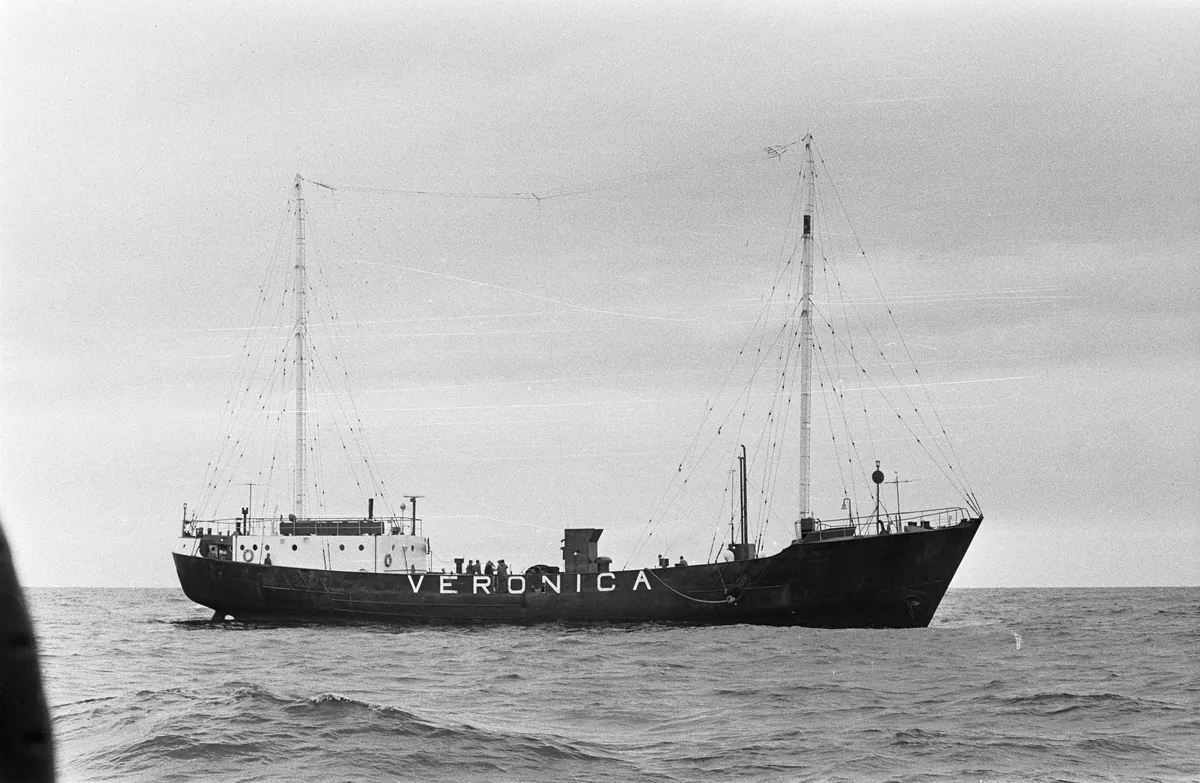
Radio Veronica as an offshore station (1960-1974)
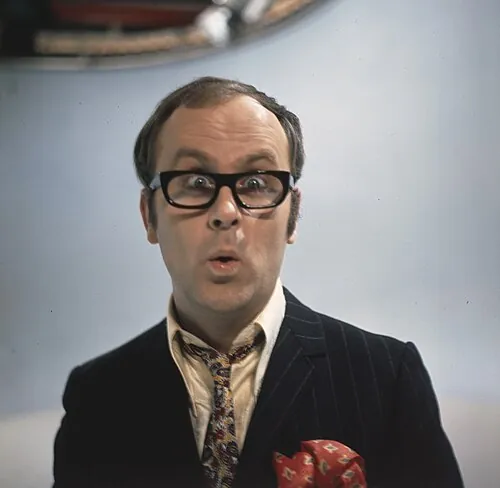
It began, like many good things in the Netherlands, with traders who wanted to sell something. Radio was not allowed to carry advertising, so Radio Veronica simply moored outside the rules: on a converted lightship, just beyond territorial waters. The initiators included the Verweij brothers, who ran a central heating business. Anyone who thought influencers were an invention of this century is mistaken: an offshore station with permanent central-heating ads was well ahead of its time.
Musically it was a seismic shift. When Willem van Kooten (alias Joost den Draaijer, who would later found his own record label) took charge, the Netherlands got jingles, a weekly hit parade and DJs who could talk without sounding like a doctor’s prescription. Veronica became hugely popular with young people, with drive-in shows that were imitated by Hilversum and the discos. Hilversum was watching and adopted what worked.
And then came the government, which after years of looking the other way announced the anti-piracy law. On 31 August 1974 Veronica signed off with the Wilhelmus. Anyone who wanted to keep hearing Veronica now had to wait on dry land.
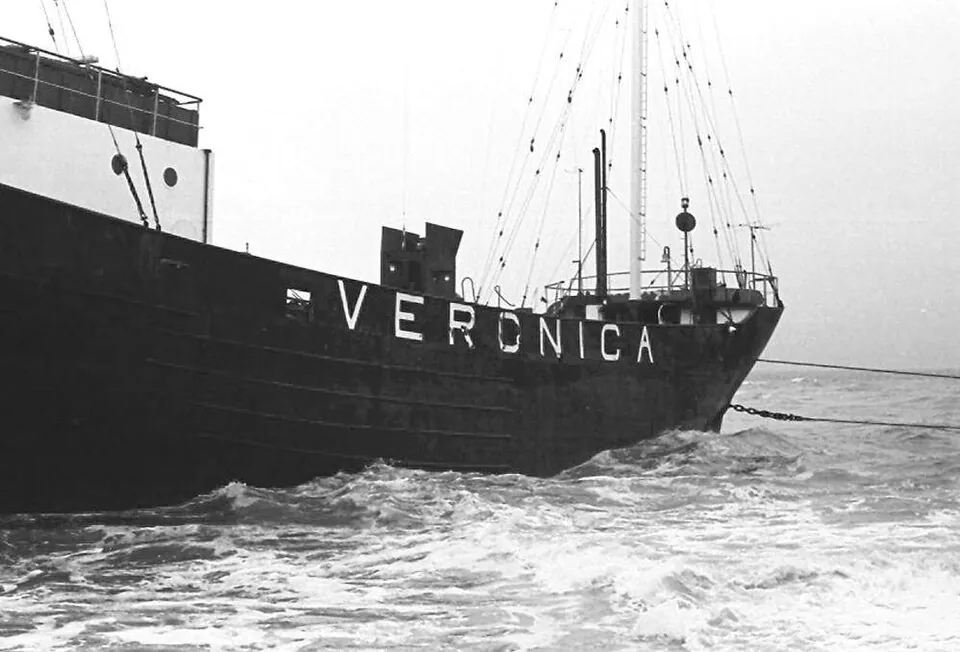
The Veronica Omroep Organisatie (1975-1995): the golden years
The wait was not long. In 1973 Veronica had already built a safety net, the Veronica Omroep Organisatie, with donors who became “Luistervis” members for one guilder. Minister Van Doorn first said no, the Council of State then said yes, and so the pirate turned into a broadcasting association with its own membership card. It could hardly have been otherwise that its first broadcast as a public broadcaster took place on the classic Hilversum 4, opened by André van Duin as Simon Somber.
And then it took off. Veronica became the broadcaster of the young, with its own television channel, a members’ magazine of more than a million copies and, on the radio, DJs such as Lex Harding, Erik de Zwart, Rob Stenders, Gijs Staverman, Alfred Lagarde, Jeroen van Inkel and Adam Curry. In 1987 the broadcaster had 877,000 members, overtaking the AVRO. By the summer of 1992 it had 1,250,000: the largest broadcaster in the Netherlands, with an offshore station as its family tree. On Friday evenings 700,000 people listened to Curry and Van Inkel. Many of today’s stations can only dream of that.
The good part is that in these years Veronica was a legal broadcaster with a gigantic following. The less good part: according to Wikipedia, it emerged in 1990 that the broadcaster had sunk millions into the illegal financing of RTL 4, and in 1993 Veronica lost an appeal. If you want to build your own broadcasting house with other people's bricks, you shouldn't complain when someone sends the removal van.
The commercial Veronica (1995 to now)
On 1 September 1995, Veronica left the public system for a commercial adventure, with Hitradio Veronica, Veronica Nieuwsradio, Kink FM and a place in the Holland Media Groep. On the radio that was the start of a long search, in which formats and owners changed. The "less successful" part of this history is a matter of opinion and therefore my reading: the figures (877,000 members in 1987, 1,250,000 in 1992) are facts, the rest is a personal interpretation by someone who stayed ashore, waiting.
What is certain: in 1997 BNN took Veronica's place in the public broadcasting system, in 2001 the association left the Holland Media Groep and, according to Wikipedia, ended up "on the edge of the abyss" afterwards. In 2003 the brand name was licensed to Sky Radio's oldies station and to an SBS television channel. The name stayed, the broadcaster went. Many familiar voices have been heard on Radio Veronica since, from Giel Beelen to Rob Stenders, and since 2024 also Wouter van der Goes and Frank van 't Hof. Whether that is nostalgia or strategy, you can decide for yourself.
Timeline: the highlights of Radio Veronica
A ship’s log of the key moments, from the founding in 1959 to the reunion aboard the Norderney in 2024.
- At sea 1959-1974
- 15 October 1959In Hotel Krasnapolsky in Amsterdam, traders found an “alliance of free radio traders”. They want to advertise consumer products on the radio, but the Dutch broadcasting system does not allow it. The solution is as simple as it is brazen: so we simply broadcast from outside Dutch waters.
- 18 April 1960The first test broadcast of Radio Veronica, still the official birthday to this day. The name VRON (Vrije Radio Omroep Nederland) was confused with the radio amateurs of VERON, so it became Veronica, after the poem "Het schaap Veronica" by Annie M.G. Schmidt. A poem about a sheep that would conquer the world: nobody ever came up with a better brand name.
- 17 May 1960Regular broadcasts begin from the former lightship Borkum Riff, on 192 metres (1562 kHz).
- 1964Willem van Kooten (alias Joost den Draaijer) becomes programme director at 23 and devises a loose, American-style radio format with jingles and new expressions such as “met stip”, “gouwe ouwe” and “alarmschijf”. Until then, Hilversum had played pop music in homeopathic doses.
- 2 January 1965The first weekly hit parade, soon the Veronica Top 40, later the Nederlandse Top 40. In November 1964 the Norderney had already replaced the Borkum Riff as the transmitter ship.
- 15 May 1971A bomb goes off on the Mebo II, the ship of rival Radio Noordzee, planted by divers who according to Wikipedia were paid 25,000 guilders for it. They are arrested that same night. Veronica shareholder Norbert Jürgens is arrested two days later. It is the darkest page of the offshore radio era, and proof that competition at sea could be rougher than a commercial break.
- 30 September 1972Veronica moves from 192 to 538 metres (557 kHz). Twenty years later that number turns up again as the name of Radio 538.
- 2 April 1973The Norderney breaks loose from her anchors during a storm and runs aground near Scheveningen. Thousands of listeners come to look, there is a 20-kilometre tailback and tram 12 cannot run for hours. Shortly afterwards Veronica is broadcasting again, now from Radio Caroline's Mi Amigo. On 18 April the ship is pulled free, while tens of thousands of young people demonstrate in The Hague for their station.
- 31 August 1974At 6 p.m. the last broadcast from sea, ending with the Wilhelmus, because the anti-piracy law comes into force. The second-to-last song was the saxophone solo from ‘What love’ by The Collectors, the last was ‘Heather’ by The Carpenters. After that, all staff are dismissed.
Background photo: The transmitter ship of Radio Veronica, 31 August 1974, Hans Peters / Anefo, CC0. Resized and tinted.
- Ashore 1975-1995
- 28 December 1975The Veronica Omroep Organisatie (VOO) opens as a public broadcaster, with an hour on the classic Hilversum 4. The opening hour is presented by André van Duin as "Simon Somber". So the pirates get to open the classical station: irony that even Hilversum could not have invented.
- 1976On 2 January Veronica’s Actuele Pop Informatie Show with Lex Harding starts on Hilversum 3; on 21 April Veronica Televisie launches. Via the Council of State the broadcaster finally gets C-status after two rejections.
- 12 October 1984Curry and Van Inkel start on Hilversum 3, on Friday evenings. At their peak, more than 700,000 people listen. Those are numbers many a station today can only dream of.
- 6 December 1985Hilversum 3 is now called Radio 3, and Veronica, by now an A-status broadcaster, gets the “full Friday”.
- 1987Veronica has 877,000 members and, together with the TROS, is the largest broadcaster in the country. At the end of October Adam Curry leaves for the United States.
- summer 1992With 1,250,000 members Veronica is the largest broadcaster in the Netherlands, and its members’ magazine has a circulation of more than a million. On 5 October horizontal scheduling arrives on Radio 3 and Veronica moves to Saturday. Radio 538 starts on 11 December.
- 1990-1993According to Wikipedia, it came to light in 1990 that Veronica had used 7 to 10 million guilders for the illegal financing of RTL 4. In 1993 the broadcaster lost an appeal and faced a seven-week suspension. The way out came into view.
Background photo: Overview of Media Park, Hilversum (2011), Dick van Aggelen, CC0. Resized and tinted.
- Commercial 1995-now
- 31 August 1995The last Veronica on Radio 3 is “Rinkeldekinkel”, presented by Jeroen van Inkel. On 1 September Veronica goes commercial, with Hitradio Veronica, Veronica Nieuwsradio and Kink FM, and the organisation moves in with the joint venture Holland Media Groep.
- 15 August 1997BNN takes over Veronica’s place in the public broadcasting system. In 2001 Veronica leaves the Holland Media Groep.
- 1 September 2003Radio Veronica is back on the air after years, with an 80s and 90s format on a Sky Radio Group station. On 20 September Veronica TV follows, an SBS channel using the brand name under licence. The name stayed, the broadcaster did not.
- 2017-2020Giel Beelen presents the morning show for three years, after which he moves to NPO Radio 2 on 1 October 2020.
- 28 June 2021Rob Stenders appears on Radio Veronica as station manager, with the Platenbonanza. In 2024 Wouter van der Goes and Frank van 't Hof announce their move from Radio 2 to Veronica.
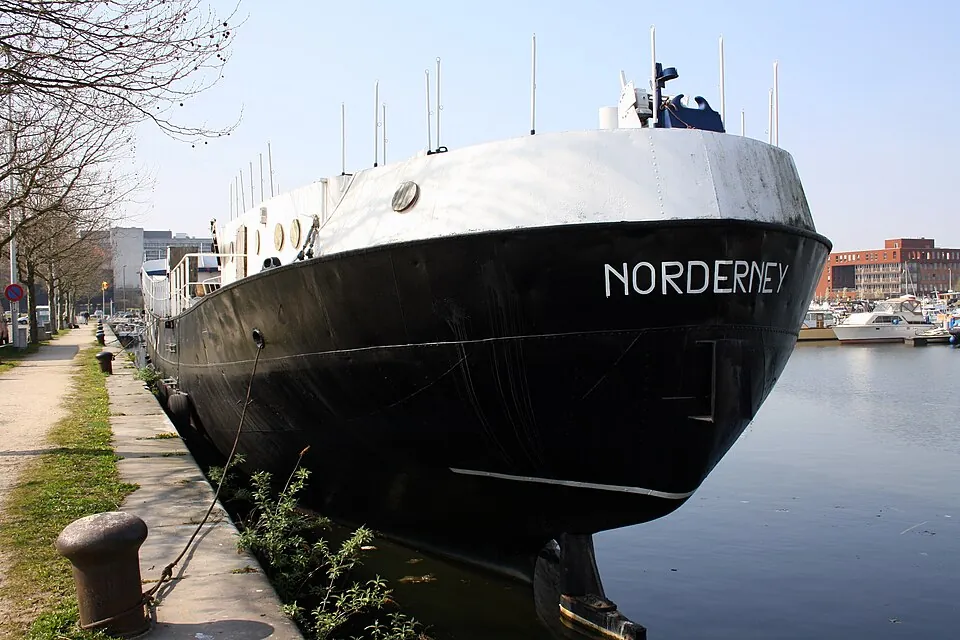
- 31 August 2024Exactly 50 years after the end of the offshore station, a reunion broadcast with former DJs and fans takes place on board the Norderney, at the NDSM shipyard in Amsterdam.
Background photo: Veronica Express (2023), Rob Dammers, CC BY 2.0. Resized and tinted.
Veronica’s DJs: Lagarde, Van Inkel and Curry
Alfred Lagarde: Big Al
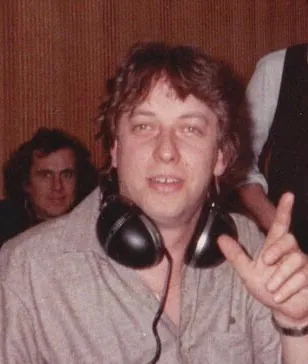
Alfred Lagarde (Groningen, 2 April 1948 – The Hague, 1 January 1998), real name Alfred van der Garde, nickname Big Al, started in May 1972 as a DJ at the offshore station Radio Noordzee, first with the morning show Espresso and from the autumn of 1972 with the popular afternoon show Driemaster. Before that station came to an end he moved to the VARA. From 1974 he made Betonuur there (until 1981 or 1982, sources differ), which for years opened with a humorous radio play in which he did all the voices himself.
In May 1982 Lagarde went to Veronica, where he became best known for Countdown Café, together with Kees Baars and Annette van Trigt, and for Oh, wat een nacht. His successes were not only behind the microphone. As Johnny Camaro he had hits in 1982 and 1988 with comic covers, he produced albums for artists including Toto and Turbo, and his voice was heard in Sesamstraat, The Lion King and countless commercials. From 1989 to the end of 1997 he was also the voice of Veronica itself. In 1998 he posthumously received a Marconi Award for best programme maker. After Veronica left the public system, Countdown Café moved to Kink FM according to the VARAgids profile, a station which, according to the profile, nobody could receive.
Former colleagues speak openly in that profile about his drinking and drug use, including Erik de Zwart and Kees Baars. Those are memories and opinions of third parties, and they contradict each other on some points. Wikipedia gives a brain haemorrhage on New Year's Day 1998 as the cause of death, when he was 49 years old. A medical link between his lifestyle and his death is not established in any of the sources. On 1 January 2023, exactly 25 years after his death, the podcast series More Than A Feeling about his life appeared. Here we leave the jokes out for a moment.
Jeroen van Inkel: from Donderwinkel to Rinkeldekinkel
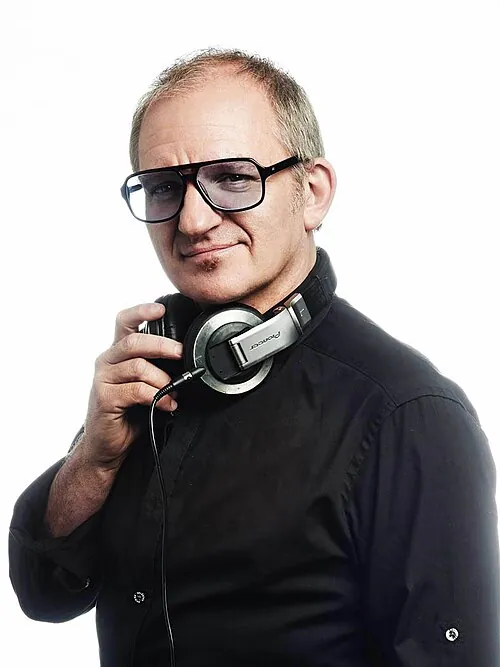
Jeroen van Inkel, born Jeroen Hendrik Donderwinkel (Amsterdam, 7 July 1961), started at the pirate stations Radio Nova, Hofstad Radio and Radio Decibel. A stage name was no unnecessary luxury: Donderwinkel sounds more like a thunderstorm than a radio show. At the end of 1983 Lex Harding brought him to Veronica, and on 12 October 1984 he started the Friday evening programme Curry en Van Inkel together with Adam Curry, which drew more than 700,000 listeners.
Rinkeldekinkel followed (from 6 December 1985), the morning show Ook Goeiemorgen (1987-1992), which according to Wikipedia grew into the most-listened-to morning show in the Netherlands, and on TV the Top 40 with expressions like "Helaas pindakaas", "Gaan met die banaan" and "Los ballos". After 1995 came Veronica, Radio 538, Qmusic, Radio 5 and, since October 2020, NPO Radio 2, where he breathed new life into Rinkeldekinkel. He has also contributed to the Top 2000 since 2020, received the Marconi Oeuvre Award in 2010, wrote two thrillers and since 2026 has made Dreamscape, a programme of nothing but ambient. From "Gaan met die banaan" to ambient: the man has covered the whole scale.
Adam Curry: from Veronica to Podfather
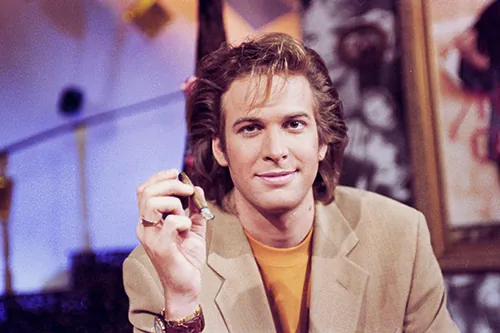
Adam Curry (Arlington, Virginia, 3 September 1964) grew up in the Netherlands from the age of eight and started at Radio Tulipa, Radio Picasso and Radio Decibel. On 13 May 1984 he joined Veronica as presenter of the TV show Countdown, and on 12 October 1984 he started Curry en Van Inkel with Jeroen van Inkel. By then his mop of hair had its own postcode.
At the end of October 1987 he left for the United States, where he became a presenter at MTV and got a radio show at Z100 in New York. In 1993 he registered the domain mtv.com, which MTV later found less funny than he did. From 1992 to 1995 he presented the dance programme Rave Radio from New York for Veronica on Radio 3. In 1999 he returned to the Netherlands, took part in the reality soap Adam’s Family in 2002 and 2003 and presented a morning show on the commercial Radio Veronica until 2004.
He then became one of the best-known Dutch figures of internet radio: through blog and podcast (Daily Source Code, and from October 2007 No Agenda with John C. Dvorak) he became a forerunner of the podcast, and is called the "Podfather" worldwide. In 2020 he started Podcastindex.org. According to the weekly magazine Story, he now lives in Texas, near Fredericksburg, starts his day with Bible reading, drinks no alcohol and no longer uses weed. On his 62nd birthday, 3 September 2026, the series Adam's Family: 25 jaar later began, with his daughter Christina in the lead role. This summer he became a grandfather for the first time.
Veronica DJs who ended up at Radio 2
The route from Veronica to Radio 2 is a classic: anyone who has spent long enough between the ad breaks often finds a warm bath at the public broadcaster after all. A selection of the Veronica DJs who worked or work at NPO Radio 2:
- Jeroen van Inkel: Veronica DJ since 1983. On NPO Radio 2 with Rinkeldekinkel since October 2020, and a member of the Top 2000 team since 2020.
- Gijs Staverman: At Veronica from 1991 to 2001, then Yorin and Q-music. On Radio 2 (KRO) since 2013, currently with Gijs 2.4 and Club Staverman.
- Rob Stenders: In 1987 the successor to Curry in Stenders en Van Inkel. On Radio 2 since September 2015, with the Platenbonanza among other things, but in 2021 he returned to Veronica as station manager. Full circle, then.
- Giel Beelen: After 3FM (1997-2017), three years of the morning show on Radio Veronica, and since 1 October 2020 the night show on Radio 2 (4 a.m.-6 a.m.).
- Edwin Diergaarde: Veronica DJ in the public years and later at the TROS, including TROS Gouden Uren on Radio 2.
Traffic does run both ways, incidentally: in 2024 Wouter van der Goes and Frank van 't Hof made the opposite journey, from Radio 2 to Radio Veronica, for the afternoon show from 4 p.m. to 7 p.m.. The list above is a selection, not exhaustive.
Frequently asked questions about Radio Veronica
When did Radio Veronica start?
Radio Veronica made a first test broadcast on 18 April 1960, which counts as its birthday. Regular broadcasts from the transmitter ship Borkum Riff began on 17 May 1960.
Why is Radio Veronica called Veronica?
The station was first called VRON, Vrije Radio Omroep Nederland, but that was confused with the radio amateurs of the VERON. The name became Veronica, partly after the poem Het schaap Veronica by Annie M.G. Schmidt.
From which ship did Radio Veronica broadcast?
First from the former lightship Borkum Riff (1960-1964), then from the Icelandic trawler Norderney (November 1964 to 31 August 1974).
When did Radio Veronica stop as an offshore station?
On 31 August 1974 at 6 p.m., because the anti-piracy law came into force. The final broadcast ended with the Wilhelmus.
What was the Veronica Omroep Organisatie?
From 28 December 1975 to 31 August 1995, the VOO was a broadcasting association within the public system. In the late 1980s, with almost 900,000 members, it was one of the biggest broadcasters, and in the summer of 1992 the biggest, with 1,250,000 members.
When did Veronica become commercial?
On 1 September 1995, Veronica left the public broadcasting system and launched the commercial Hitradio Veronica, as part of the joint venture Holland Media Groep.
What was Curry en Van Inkel?
A popular Friday-evening programme from Veronica on Hilversum 3 and Radio 3, with Adam Curry and Jeroen van Inkel, from 12 October 1984. It drew more than 700,000 listeners and is regarded as iconic in Dutch radio history.
Which Veronica DJs later worked at Radio 2?
Among others Jeroen van Inkel, Gijs Staverman, Rob Stenders, Giel Beelen and Edwin Diergaarde. Conversely, Wouter van der Goes and Frank van 't Hof moved from Radio 2 to Radio Veronica in 2024.
Who was Alfred Lagarde?
A Dutch radio DJ and producer (Groningen, 2 April 1948 – The Hague, 1 January 1998) who became known for Betonuur at the VARA and for Countdown Café at Veronica, and who was also a voice-over artist, record producer and, as Johnny Camaro, a hitmaker.
Where is the Norderney, Radio Veronica's transmitter ship?
The former transmitter ship has been preserved. In 2024 it lay at the NDSM shipyard in Amsterdam, where the reunion broadcast took place 50 years after the end of the offshore station.
Sources
Dates and facts have been checked against the sources below. Where sources contradict each other, the most cautious wording has been chosen. What is said about Alfred Lagarde’s drinking and drug use comes from the memories of former colleagues and is not an established fact. The short explanations in the Wikipedia popups come from Wikipedia and are available under the licence CC BY-SA 4.0. Each photo credits its author and licence; the photos have been resized.
- Wikipedia (nl): Radio Veronica (zeezender)
- Wikipedia (nl): Veronica Omroep Organisatie
- Wikipedia (nl): Alfred Lagarde
- Wikipedia (nl): Jeroen van Inkel
- Wikipedia (nl): Adam Curry
- Wikipedia (en): Radio Veronica
- Wikipedia (en): Veronica (media)
- Wikipedia (en): Willem van Kooten
- VARAgids: Biografie Alfred Lagarde
- Radiopedia: Alfred Lagarde
- BNNVARA: Wie is Jeroen van Inkel?
- Story: Adam Curry (62) radically overhauled his extravagant lifestyle
- Hart van Nederland: Giel Beelen and Jeroen van Inkel to Radio 2
- NPO Radio 2: Gijs Staverman
- Rob Stenders: biografie
- NOS: Rob Stenders from Radio 2 to Veronica
- NOS: Van der Goes and Van ’t Hof to Radio Veronica
- NH Nieuws: reünie aan boord van de Norderney, 2024